3 IDEAS FROM ME
I.
“You don’t need to solve every problem right now, only those that stand in your way.”
II.
“If you are bummed by the state of the world, go build something.”
III.
“Be forgiving with your past self. What’s done is done. No sense in beating yourself up about it.
Be strict with your present self. Win the moment in front of you right now.
Be flexible with your future self. There are many paths to success. You don’t need life to be a certain way to live well.”
2 QUOTES FROM OTHERS
I.
Historian and philosopher Will Durant on staying young:
“Childhood may be defined as the age of play; therefore some children are never young, and some adults are never old.”
Source: Fallen Leaves
II.
Author and finance writer Morgan Housel on money and lifestyle:
“If we have the same assets and I can earn an 8% annual returns, and you can earn 12% annual returns, but I need half as much money to be happy while your lifestyle compounds as fast as your assets, I’m better off than you are. I’m getting more benefit from my investments despite lower returns.
Think about that in the context of how much time and effort goes into achieving 0.1% of annual outperformance in this business – millions of hours of research, tens of billions of dollars of effort – and it’s easy to see what’s potentially more important or worth chasing.
There are investors who grind 80 hours a week to add 10 basis points to their returns when there are two or three full percentage points of lifestyle bloat in their finances that can be exploited with less effort. Outperformance is amazing when it can be achieved, and some can achieve a lot of it. But the fact that there’s so much effort put into one side of the finance equation and so little put into other is an opportunity for most people, companies, and countries.
This is not about living like a monk, hampered by frugality. It holds true at every level of wealth and spending. The value of all money is relative to expectations… The idea that reducing your needs has the same impact as increasing your income – but the former is more certain and in your control than the latter, so it has a higher expected value – is as true for someone spending $15,000 a year as it is someone spending $15 million per year.”
Source: The Biggest Returns
1 QUESTION FOR YOU
Is this a problem you need to solve or a tension you need to learn to live with?
Until next week,
James Clear
Author of Atomic Habits
Cofounder of Authors Equity
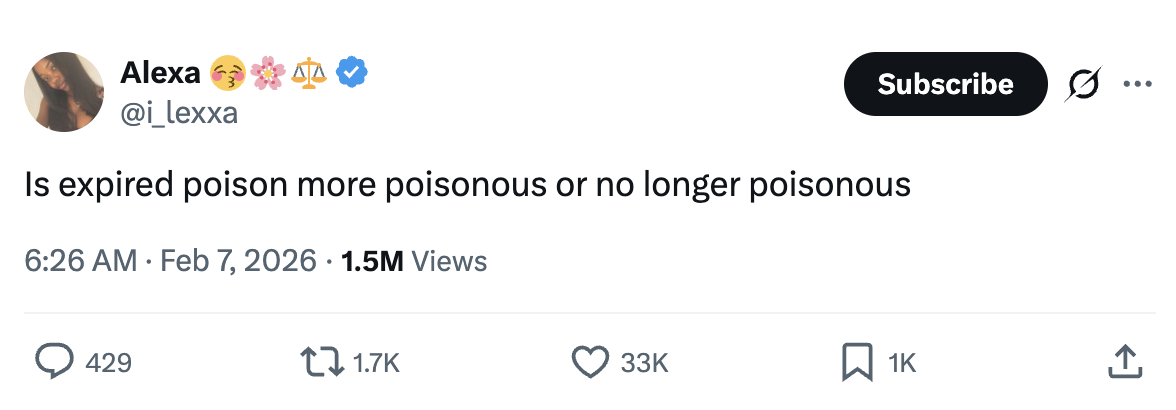
p.s. A true mystery.